
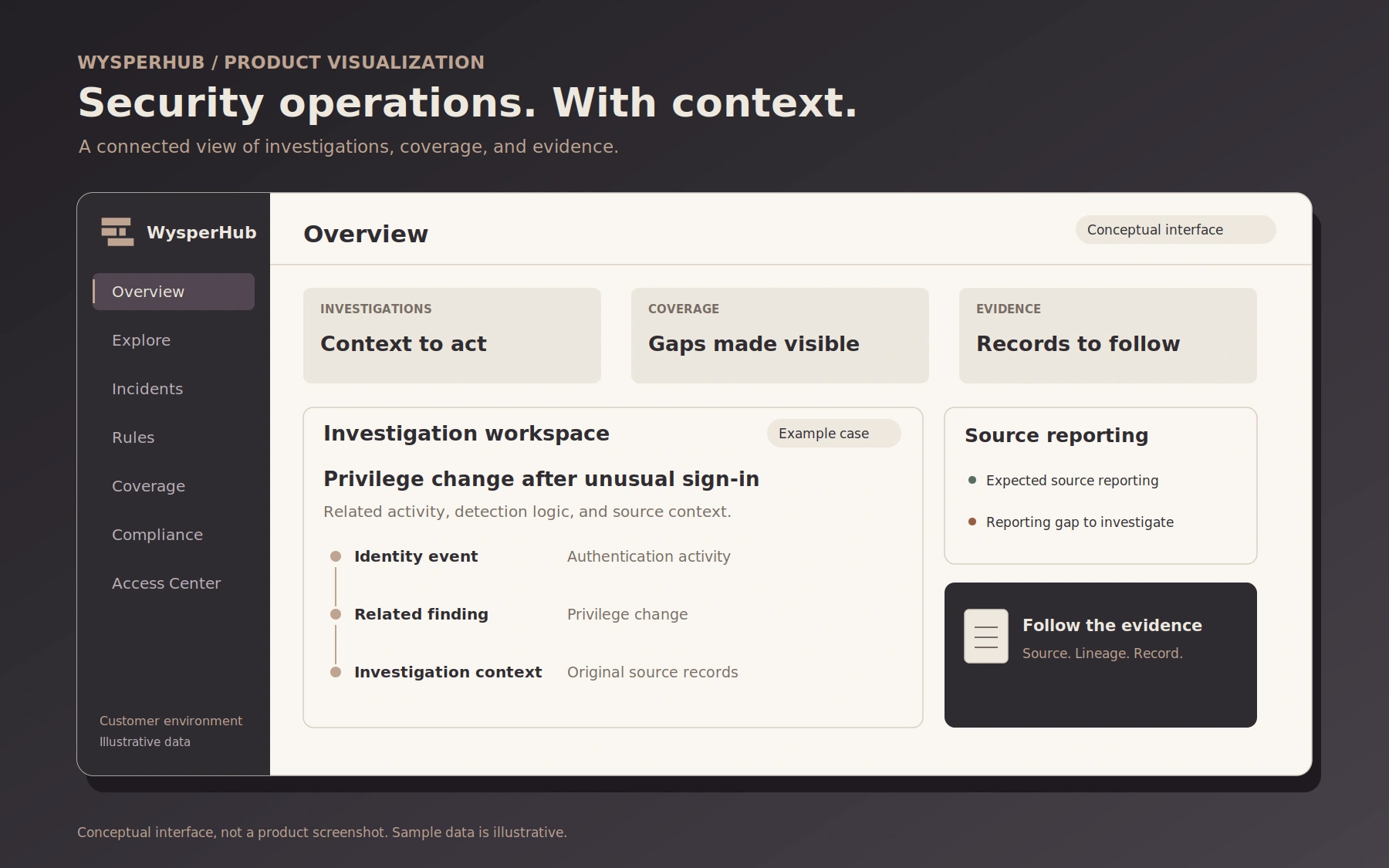
WysperHub. Security monitoring built for federally regulated environments.
WysperHub is a SIEM that runs inside your own AWS account, in a commercial region or GovCloud. It's designed so it doesn't contact us.
- Evidence mapped to NIST SP 800-171 Rev 2
- Runs in your AWS account
- Commercial or GovCloud
- In development
From Wysper Technologies · In development
Cloud cybersecurity, DevSecOps, and compliance engineering for federal missions.
Wysper offers this work to government contractors, primes and federal programs. The same engineering practice builds WysperHub.
See all services
Cloud Cybersecurity & Compliance
Cloud posture, identity and access, hardening, monitoring, and CMMC / NIST 800-171 readiness for regulated workloads. This is where most of our government contractor work starts.
View practice area
Cloud Engineering & DevSecOps
Architecture, migration, infrastructure as code, and CI/CD pipelines with security gates built into delivery.
View practice area
Consulting & Advisory
Assessments, roadmaps, fractional security leadership, and managed operations with engineering discipline.
View practice areaBuilt for regulated and federal environments.
The organizations we serve, and the standards that govern how we serve them.
Federal missions
Engineering aligned to RMF and agency security baselines, from pipeline to production.
Defense industrial base
Contractors handling CUI and working toward CMMC Level 1 or 2, without enterprise overhead.
Regulated commercial
Cloud-dependent businesses that answer to regulators, primes, or customers.
Compliance-first
Controls, evidence, and audit readiness are design inputs, not paperwork after the build.
Deterministic by design
Systems whose behavior can be explained, repeated, and defended to an assessor.
AI, used responsibly
AI accelerates the build. Deterministic systems remain the authority.
Build and operate
We operate what we deploy and document what we change.
Direct communication
Accurate scoping, supportable claims, and disciplined delivery.
Engineer-led from scoping to operations.
Every engagement begins with a written assessment of current state. Design and implementation treat controls and evidence as requirements, not documentation produced after the fact. Accountability continues through operations.
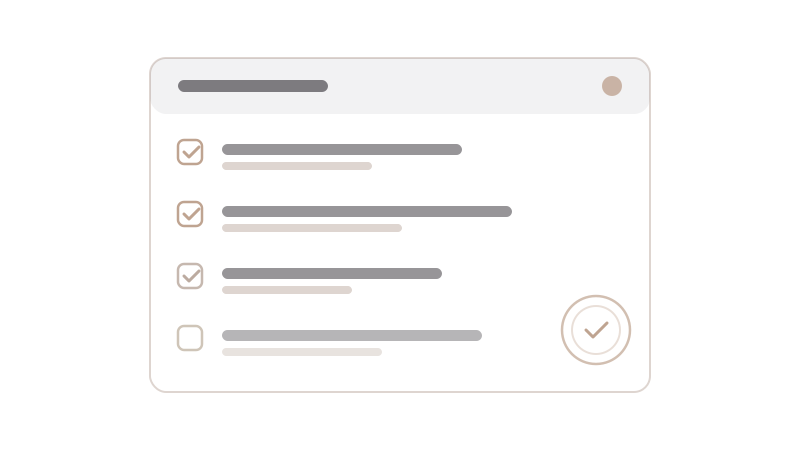
How an engagement works.
The engineers who start the work stay accountable through each step.
Assess
We assess the environment as it exists and the obligations that apply to it. You receive a written assessment of current state before any work is proposed.
Implement
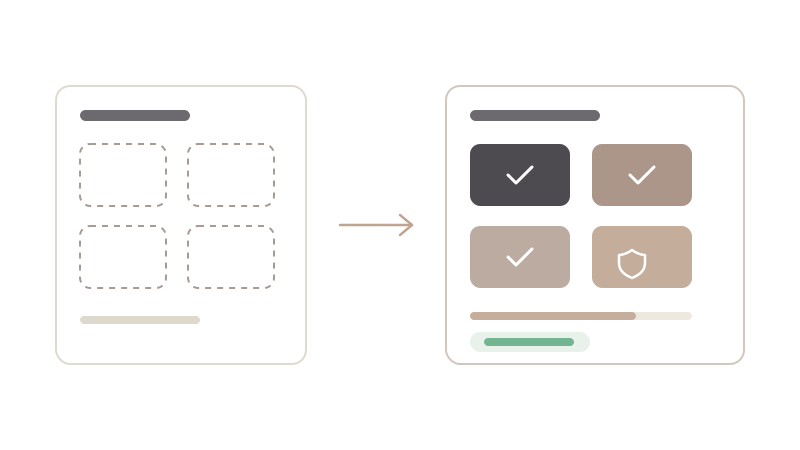
Design and implementation to the applicable baselines, with controls and evidence treated as requirements. What we change is documented as we change it, not reconstructed later.
Operate
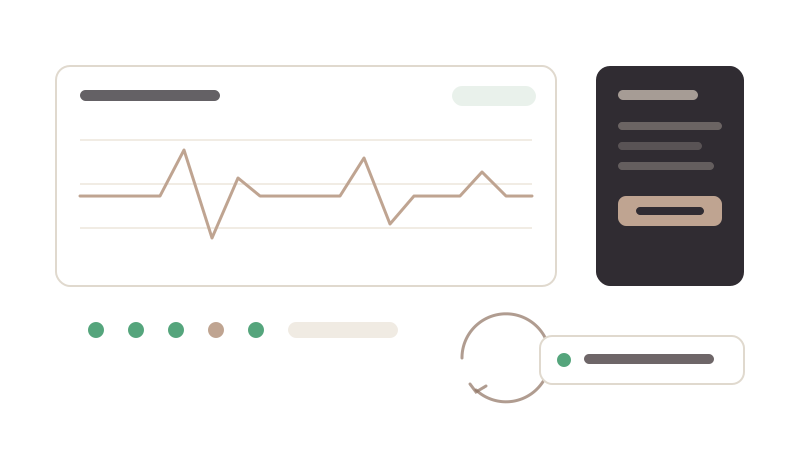
We operate what we deploy and maintain alignment between security operations and business operations.
Speak with an engineer.
Describe what you are building, migrating, or required to comply with. An engineer will respond with a substantive assessment.